
Ranchi: As student-led protests demanding accountability in recruitment examinations continue to shape India’s political and social discourse, a quiet but determined movement unfolding in Jharkhand is earning widespread appreciation for its disciplined and peaceful approach.
For nearly two months, students across the country have taken to the streets over alleged paper leaks, recruitment irregularities, and demands for greater transparency in public examinations. While the protests at Delhi’s Jantar Mantar attracted national attention under the banner of the Cockroach Janata Party (CJP), the ongoing agitation in Ranchi has emerged as a contrasting example of a locally led, non-political student movement.
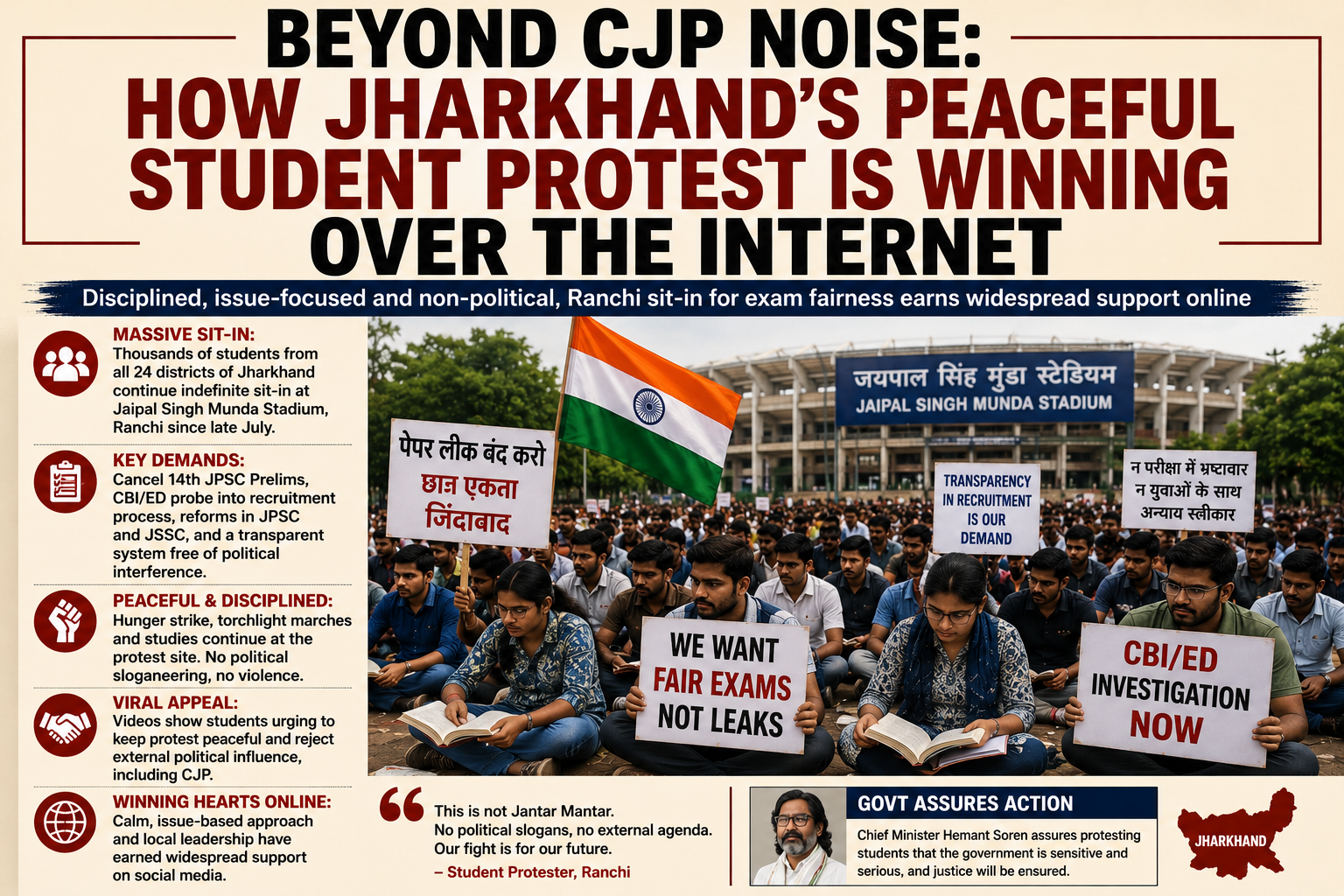
Thousands of aspirants from all 24 districts of Jharkhand have been staging an indefinite sit-in at Jaipal Singh Munda Stadium since late July, demanding the cancellation of the 14th Jharkhand Public Service Commission (JPSC) Combined Civil Services Preliminary Examination, an independent probe by the Central Bureau of Investigation (CBI) or the Enforcement Directorate (ED) into recruitment processes, and structural reforms in both the JPSC and the Jharkhand Staff Selection Commission (JSSC).
The protesters allege widespread irregularities in recruitment examinations and have called for a transparent, merit-based system free from political interference.
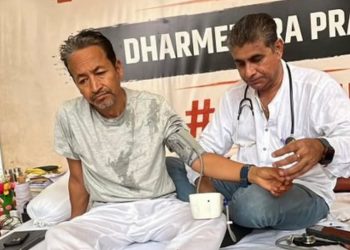
Like several student movements across the country, some Jharkhand aspirants have launched an indefinite hunger strike to press their demands. However, what has distinguished the Ranchi protest is its emphasis on maintaining peace, discipline and political neutrality.
Students have organised torchlight marches, continued preparing for competitive examinations while camping at the protest site, and repeatedly appealed for the movement to remain focused solely on examination reforms. Videos circulating on social media show protesters requesting participants to avoid political slogans and external affiliations, arguing that the movement should remain student-driven.
Several viral clips also show students interacting calmly with journalists and urging supporters to keep the focus on issues of recruitment transparency rather than political spectacle. In one widely shared video, a protester reportedly appealed to groups associated with the Cockroach Janata Party (CJP) and its founder, Abhijeet Dipke, not to join the agitation, stating that outside involvement could alter the character of a movement built through local organisation. Zee News, however, said it could not independently verify the authenticity of these viral videos.
The restrained nature of the Ranchi protest has drawn significant attention online, with many social media users praising the students for keeping the agitation peaceful and issue-centric. Unlike broader political mobilisations, the Jharkhand movement has remained rooted in local leadership and focused on demands related to recruitment examinations.
Meanwhile, Jharkhand Chief Minister Hemant Soren has assured protesting students that the government is sensitive to their concerns and has promised a fair resolution. Even as official inquiries and government responses continue, the Ranchi sit-in has increasingly been viewed as a model of peaceful democratic protest, resonating with many who believe the movement’s disciplined approach has strengthened its credibility and public support.