
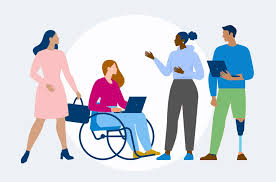
Discrimination rarely announces itself loudly. It does not always appear as denial of rights or overt exclusion. More often, it takes shape in everyday choices: who we sit next to, who we listen to, who we consider familiar, and who we quietly keep at a distance. These small moments, repeated over time, draw invisible lines between people, turning difference into distance.
Discrimination is often discussed in terms of laws and policies, but in reality it unfolds in interactions, in classrooms, workplaces, and even within families. It does not only affect people with disabilities. It also shapes the lives of those from low income communities, members of LGBTQ+ communities, people living with mental health challenges, and many others who fall outside what society considers “normal.”
Working in community mental health and psychosocial programs at the Awareness for Community Transformation (ACT) Clinic, I have seen how discrimination rarely begins with dramatic acts of injustice. It often starts quietly, through everyday behaviour.
When Difference Is Treated as Deficiency
In India, conversations about discrimination are often limited to disability and mental health. The country has taken important legal steps, with laws such as the Rights of Persons with Disabilities Act (2016) and the Mental Healthcare Act (2017), which recognize the dignity and rights of individuals. Yet laws alone do not erase stigma. Government estimates suggest that over 26 million people in India live with some form of disability, though the real number is likely higher due to underreporting.
Why AI Will Enhance, Not Replace, Human Diplomacy
For those with invisible conditions such as autism, ADHD, or mental health challenges, discrimination is often subtle but persistent. Inclusion in schools can sometimes become a formality rather than a lived reality. An autistic student may be enrolled in a classroom yet remain socially excluded. Parents may privately request teachers to move their children away. Other students may be discouraged, sometimes unintentionally, from interacting with someone who communicates or learns differently. What appears to be a minor seating decision reflects a deeper belief that difference is a problem rather than a natural part of human diversity.
The Silence Around Mental Health
One of the most telling forms of discrimination emerges in responses to mental health. Families do not always seek professional help when they notice developmental delays. Even when they do, and a psychologist suggests the possibility of a neurodevelopmental condition such as autism or ADHD, the response is often silence. Many families do not return for follow up care.
Nishaanchi: The Badly Missed Target
The fear of a diagnosis, of a label, can feel more overwhelming than the condition itself. For some, the concern is not just about the child but about how the child will be perceived by relatives, neighbours, or schools. This reaction is not always denial. It often reflects the pressure to maintain an image of normalcy. In a culture where academic success and social reputation carry significant weight, acknowledging a mental health condition can feel like a personal failure. The consequence is that children who could benefit from early support are left without it.
Healthcare spaces are often assumed to be neutral, yet they are not immune to bias. People living with disabilities or mental health conditions frequently report being dismissed, having their symptoms minimized, or being excluded from decisions about their own care. Some avoid seeking medical help altogether due to fear of stigma.
Research suggests that such experiences are not isolated. They point to systemic issues in how care is delivered. In India, these challenges are compounded by a shortage of mental health professionals and limited access to services, especially in rural and low income areas. When structural gaps combine with stigma, the barriers to care become even more difficult to overcome.
Discrimination Beyond Disability
Discrimination rarely operates along a single axis. It intersects with class, gender, sexuality, and social identity. A person from a low income background may be treated differently in a clinic or school based on appearance alone. A member of the LGBTQ+ community may experience conditional acceptance that shifts depending on context or audience.
Even in spaces that claim to be inclusive, exclusion can take subtle forms. It may appear as avoiding conversations about identity, making insensitive remarks, or questioning someone’s legitimacy. These actions are often not overt, but they are deeply felt. Discrimination, in such cases, is embedded in everyday language and assumptions.
Laws and policies are essential, but they are not sufficient. Inclusion is built through everyday actions. It can begin with classrooms that truly integrate students rather than simply placing them side by side. It can mean listening with patience when someone speaks about their mental health, instead of dismissing their experience. In workplaces, it involves recognising differences in background and creating environments that respect them.
At a community level, inclusion may be as simple as ensuring that conversations about gender identity, disability, or mental health are not treated as taboo. Language also matters. The words we use can reinforce stereotypes or challenge them.
Discrimination often persists not because of deliberate harm, but because many people have never been encouraged to question their assumptions. Change becomes possible when people encounter different perspectives and lived experiences. A parent raising an autistic child, a teenager navigating depression, or someone seeking acceptance for their identity can all reshape how we understand difference.
A society that values dignity cannot rely on selective empathy. Inclusion must move beyond slogans and awareness days. It has to exist in the ordinary moments where people either feel they belong or sense that they do not. The shift begins when we stop treating difference as a barrier and start seeing it as a shared part of the human experience.
(Anoushka Nair is a Research Assistant at Awareness for Community Transformation Clinic (ACT), Jindal Institute of Behavioural Sciences.)