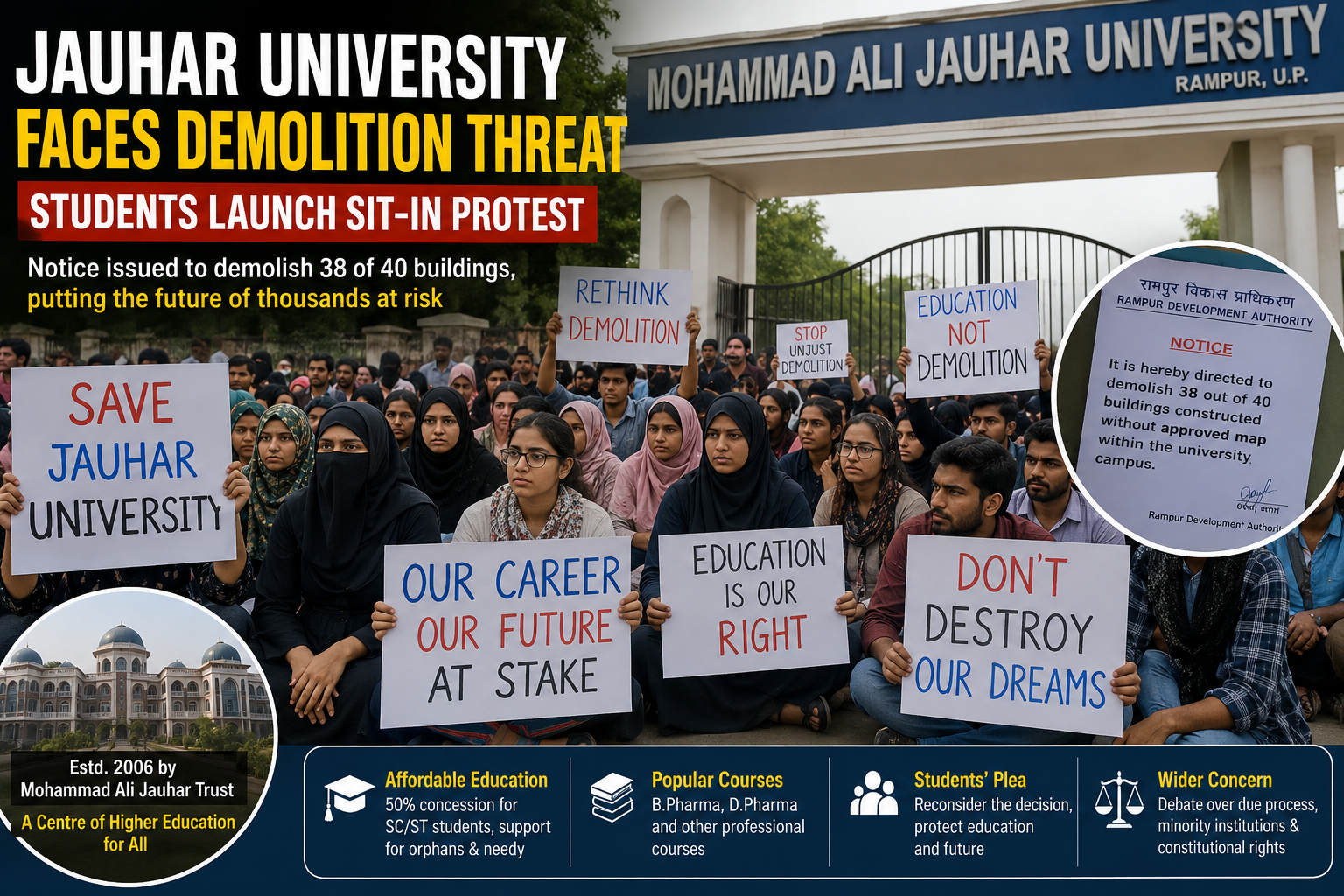
Rampur, Uttar Pradesh: A sit-in protest is underway outside Mohammad Ali Jauhar University in Rampur after the Rampur Development Authority (RDA) issued notices directing the demolition of 38 out of the university’s 40 buildings. Students, faculty members and supporters say the move could effectively shut down the institution and disrupt the education of thousands.
The university, established under the Mohammad Ali Jauhar Trust chaired by jailed Samajwadi Party leader Azam Khan, has become the centre of a growing legal and political controversy. Protesting students argue that demolishing the campus would deprive many from economically weaker and marginalised backgrounds of access to affordable higher education.
“Our career and future are at stake. We want the government to reconsider its decision,” law student Mehroza Khan told The Indian Express. She noted that the university offers significant fee concessions, including 50 per cent scholarships for Scheduled Caste and Scheduled Tribe students, assistance for orphaned students, and affordable professional courses such as B.Pharma and D.Pharma that many would struggle to pursue elsewhere.
The foundation stone of Mohammad Ali Jauhar University was laid on September 18, 2006, and the campus was developed over the following years. According to the RDA, only the Medical College and one academic block have approved building plans, while the remaining 38 structures were allegedly constructed without mandatory civic permissions.
The university administration disputes this claim, maintaining that the buildings were constructed before the area came under the jurisdiction of the RDA and had received approvals from the local zilla panchayat at the time.
The demolition notices have sparked wider debate beyond the legal dispute. Students, civil society groups and opposition leaders argue that closing the university would disproportionately affect Muslim, SC/ST and economically disadvantaged students who rely on its subsidised education. They have urged authorities to explore legal and administrative solutions that preserve the institution while addressing regulatory concerns.
The controversy has also revived discussions about the use of demolition drives, due process, and the protection of educational institutions under constitutional principles. Critics argue that actions affecting universities should balance compliance with planning laws against the larger public interest of ensuring uninterrupted access to education.
As the sit-in continues, protesters are demanding that the demolition notices be withdrawn and that the government engage in dialogue before taking any irreversible action that could impact the future of thousands of students.